
The Best Board Games on Steam (and Where to Play Free)

Board games on Steam split into three formats: a 3D physics sandbox where you move the pieces yourself, an automated rules engine that handles the math, or a ready-made digital adaptation built specifically for the screen. Which one you want depends on how your crew plays.
Boot up your PC. Getting your group together for game night used to mean clearing off a massive dining table. Then you'd spend an hour sorting plastic miniatures and cardboard tokens. Now, you just boot up your PC, launch a lobby, and get straight to the fight.
Key Takeaways
- Steam board games split into three types: 3D sandbox, ready-made adaptation, and automated rules engine.
- Tabletop Simulator handles physics only, so your group still manages every rule by hand.
- Ready-made adaptations like Scythe and Gloomhaven need every player to own a copy.
- Freemium browser platforms usually only require the host to pay, not every guest.
- Sin of Angels sits outside all three: free, browser-based, and rules-automated with no purchase.
The digital tabletop space has exploded. You no longer have to settle for clunky ports of old family games. Today's best board games on PC offer deep strategy, aggressive area control, and complex economies. Software manages all of it and keeps players from bending the rules.
Whether you want to muscle your friends out of their territory in a heavy strategy game, or just run a quick card game, the options are massive. But sorting through the storefront can be a grind. You have to figure out who needs to buy a copy, which games support remote multiplayer, and whether a title actually works on a laptop or a Steam Deck.
This guide breaks down the different ways to play digital board games, how the pricing models work, and where our own browser-based strategy game fits in.
The Options Sorted by Category
Not all digital tabletop games on Steam are built the same way. They fall into three distinct categories. Knowing the difference determines whether you spend your night actually playing the game, or fighting with the interface.
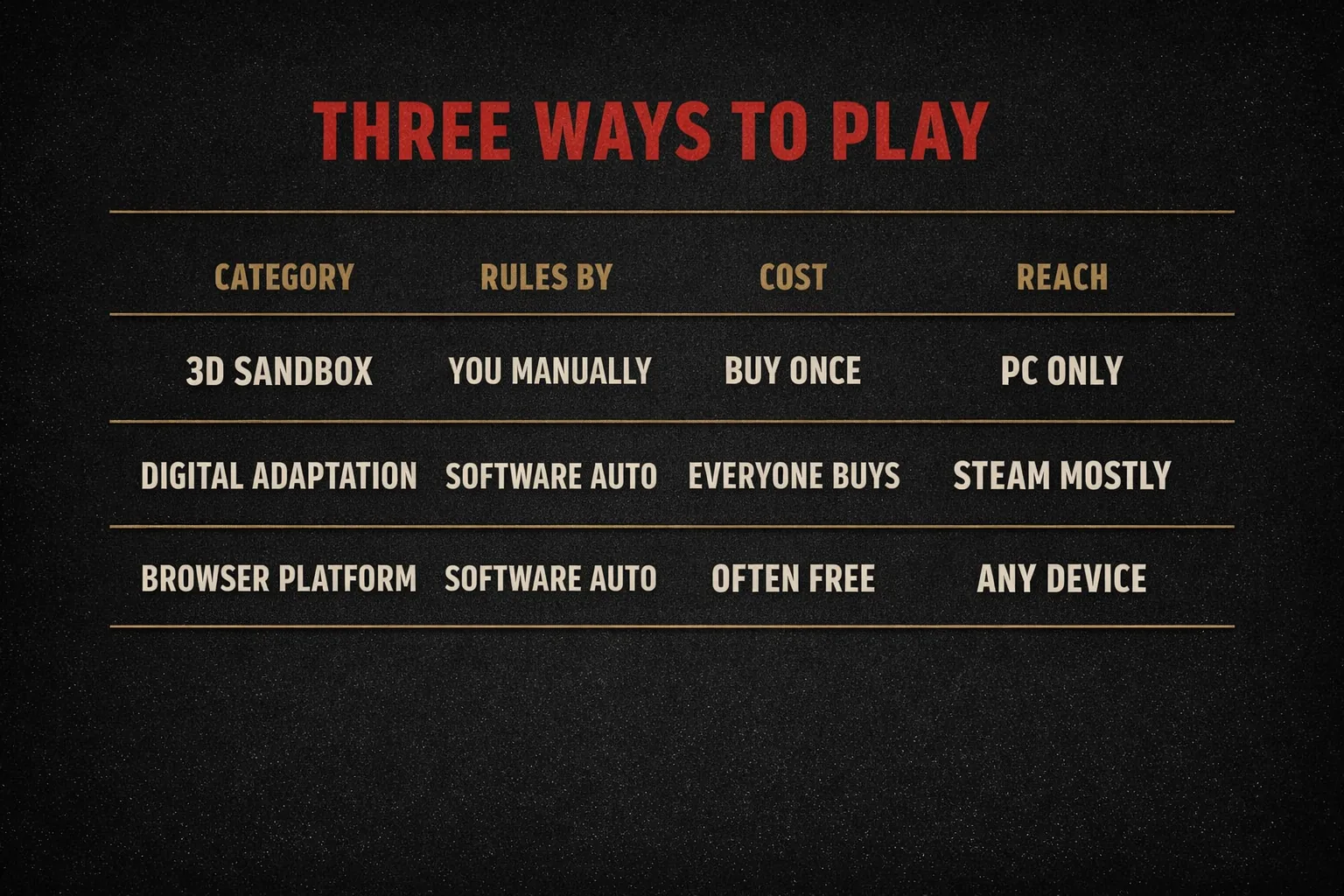
| Category | Who Handles the Rules | Cost to Play | Platform Reach |
|---|---|---|---|
| 3D Physics Sandbox (Tabletop Simulator) | You do, manually, piece by piece | Everyone buys the base software; community mods are free once you own it | Steam only (PC, Mac, or Linux) |
| Ready-Made Digital Adaptations (Scythe, Dune: Imperium, Slay the Spire, etc.) | The software, automatically | Every player typically needs to own the game | Steam; some titles (Slay the Spire, Dorfromantik) also run on Steam Deck |
| Automated Rules Engines / Browser Platforms | The software, automatically | Often freemium; usually only the host needs a premium account | Browser-based, works on weak laptops and tablets |
How to choose: run each option through three questions.
- Who handles the rules? If you want manual control and total flexibility, pick the sandbox. If you want the software to do the math, pick an adaptation or an automated engine.
- What's the cost to play? If everyone owning a copy is a dealbreaker, lean toward Tabletop Simulator (buy once) or a freemium browser platform (only the host pays).
- What's your platform reach? If your crew is split across phones, tablets, and PCs, a Steam-only game will leave someone out.
That's the same decision the table above lays out. Answer those three questions in order, and you'll land on the right category before you ever open the Steam store.

The 3D Physics Sandbox
Search for a Steam board game simulator, and you'll land on Tabletop Simulator. It's not a single game. It's a physics engine that gives you a virtual table, a deck of cards, and a pile of pieces. You use your mouse to pick up tokens, roll dice, and move pawns.
The upside is absolute freedom. The community has built thousands of mods for almost every tabletop game in existence. If a game has been printed on cardboard, someone has probably scanned it and uploaded it to the workshop. You can play massive, sprawling strategy games with your remote friends exactly as you would in a basement.
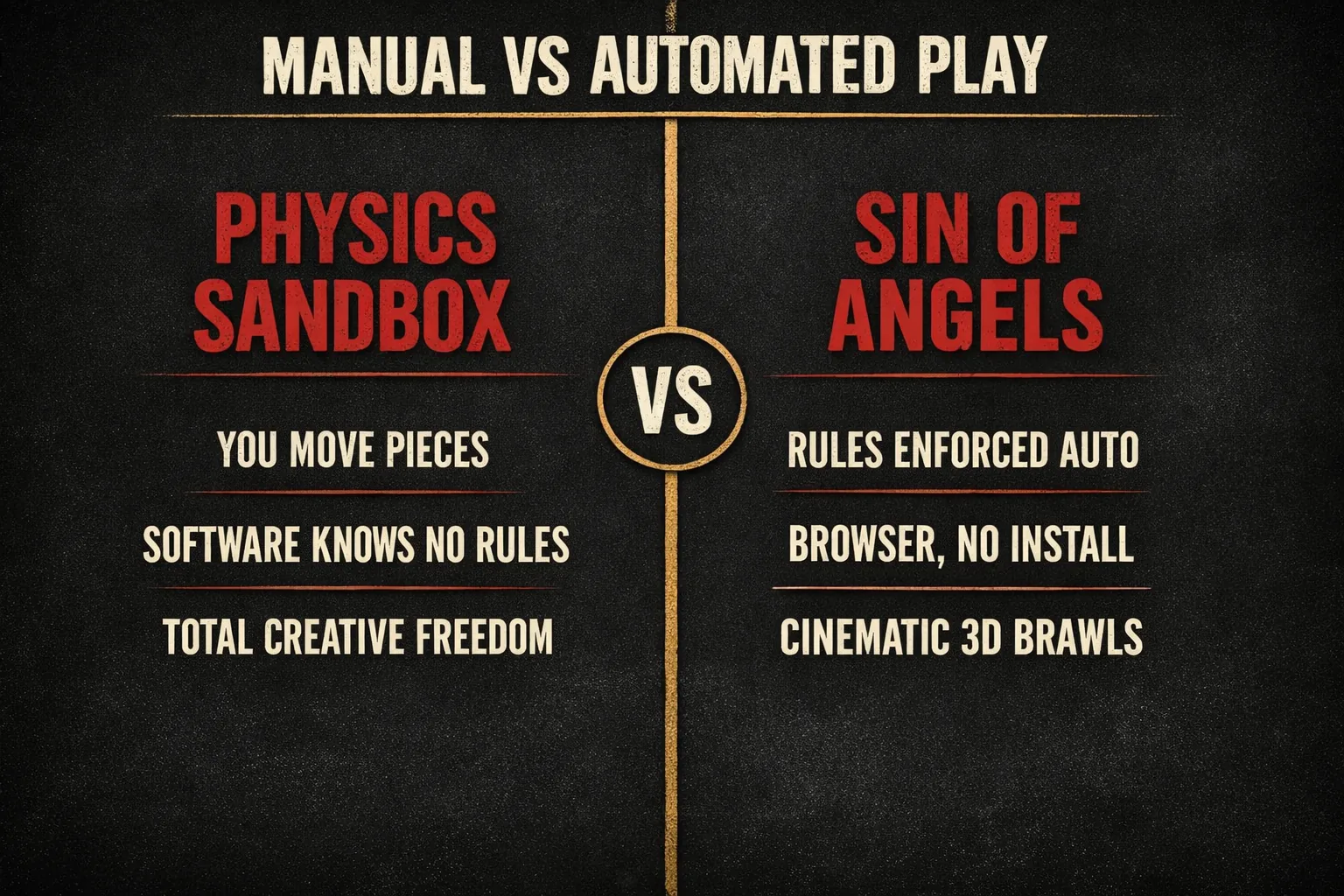
The catch: the software doesn't know the rules. It just simulates physics. If you want to take an action, you have to manually deduct your resources, move your piece, and calculate the combat outcome.
The risk: if someone bumps the table or accidentally deletes a crucial deck of cards, you have to fix it yourself. It requires everyone in the lobby to know how to play, and it demands patience when manipulating tiny digital pieces with a mouse.
Ready-Made Digital Adaptations
The best digital board games on Steam, for most players, are dedicated ready-made adaptations. These are standalone video games built from the ground up to replicate a specific board game. Titles that dominate this space include:
- Scythe
- Dune: Imperium
- Terraforming Mars
- Gloomhaven
- Spirit Island
- Ark Nova
- Wingspan
- Slay the Spire, which also fits here as a heavy deck-builder that feels exactly like a tabletop experience
These games handle all the heavy lifting. The software enforces the rules, calculates the math, and tracks the score. You can't make an illegal move, and combat resolves instantly. Setup and teardown take zero seconds.
What cardboard can't do, these adaptations can:
- Original soundtracks and animated attacks
- Smart AI opponents for when your regular crew can't make it online
- Instant solo campaigns, no setup required
The interface is built specifically for that one game's mechanics. That makes it much smoother to play than a generic physics sandbox.
Automated Rules Engines and Browser Platforms
The third category lives partly on Steam and partly on the web. These platforms host hundreds of games in a 2D interface. They enforce the rules like a dedicated adaptation, but use simple, top-down graphics to keep things moving fast.
Many players look for these platforms in their browser rather than downloading a client. You can read our guide on board game arena alternatives to see how these web-based hubs operate.
The tradeoff: you get speed and accessibility, not visual flair. You click a button, the game handles the logic, and the turn passes to the next player. It lacks the flashy 3D graphics of a dedicated Steam game. But it lets people play on weak laptops or tablets without installing anything.
Classic Board Games on Steam
Classic board games on Steam are your best bet if you just want nostalgia. You'll find bundles with old-school hits like Battleship and other simple family games. These are fine for a casual night. But they rarely hold the attention of a group looking for deep strategy, negotiation, or area control, since modern tabletop design has largely surpassed them.
If none of the three categories above quite fit, that gap is exactly why we built Sin of Angels: a heavy area-control game without the Steam price tag or the install, browser-based and free. It's in closed beta right now. Join the Beta
Free vs Paid and Platform Support
Getting a group of four to six people to buy a new game can kill a game night before it starts. Understanding how these games handle pricing and platform compatibility is the most important step in choosing what to play.
The Cost of Digital Tabletop Games
Free board games on Steam are limited, option-wise. Most premium tabletop adaptations require every player in the group to buy their own copy. If you want to play Dune: Imperium or Scythe online, everyone needs it in their Steam library.
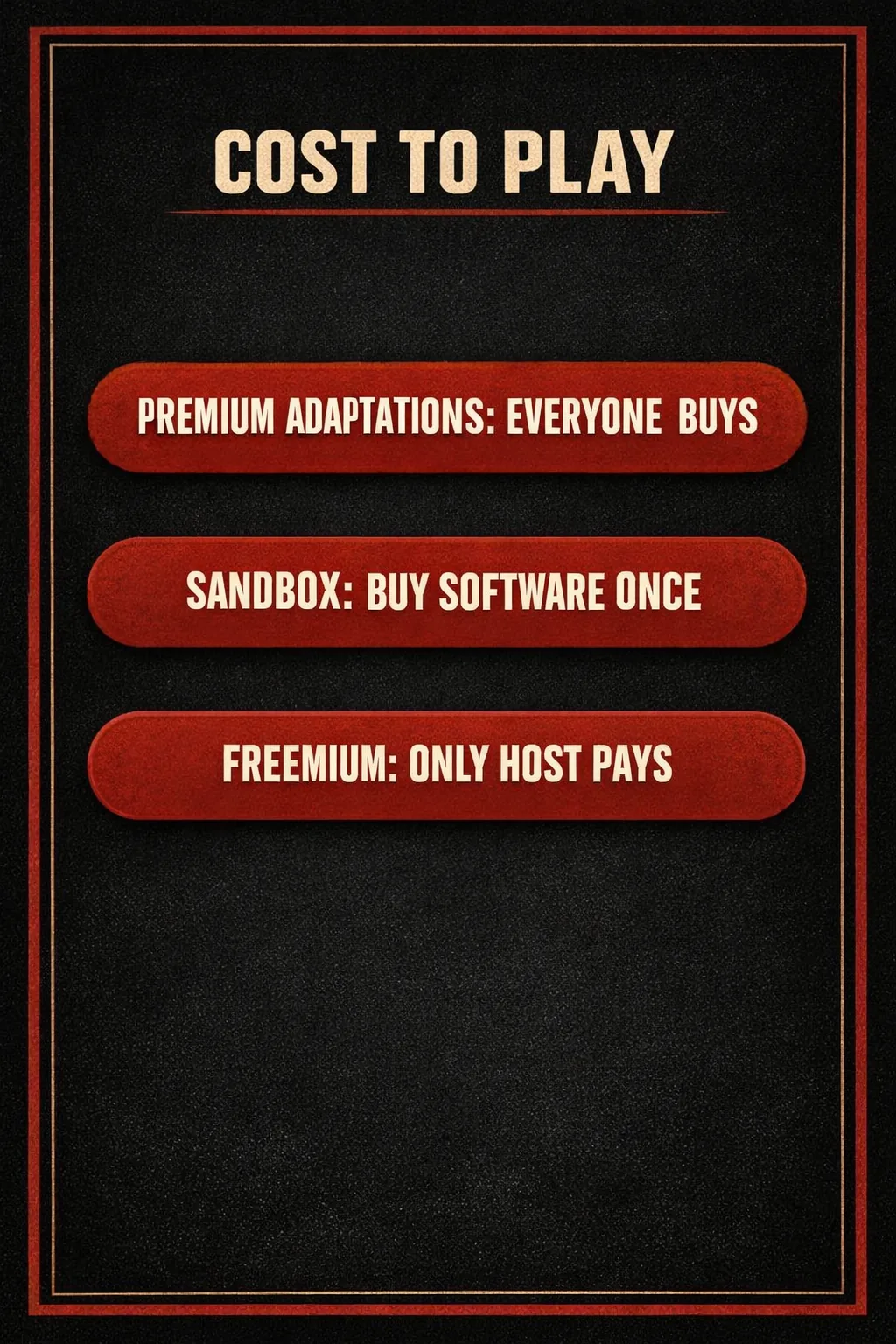
Cost breaks down differently by category:
- Premium adaptations (Scythe, Dune: Imperium): every player buys the game
- Tabletop Simulator: everyone buys the base software once, then community mods are free
- Freemium platforms: usually only the host needs a paid account, guests join free
That freemium model is the cheapest way to get a large group together without everyone opening their wallets. You can read our guide on is board game arena free to see how these subscription-based hubs work.
Device and Platform Compatibility
The hardware bar is low. Not everyone has a high-end gaming PC, and digital board games rarely need heavy hardware. Most dedicated adaptations will run perfectly fine on an old laptop.
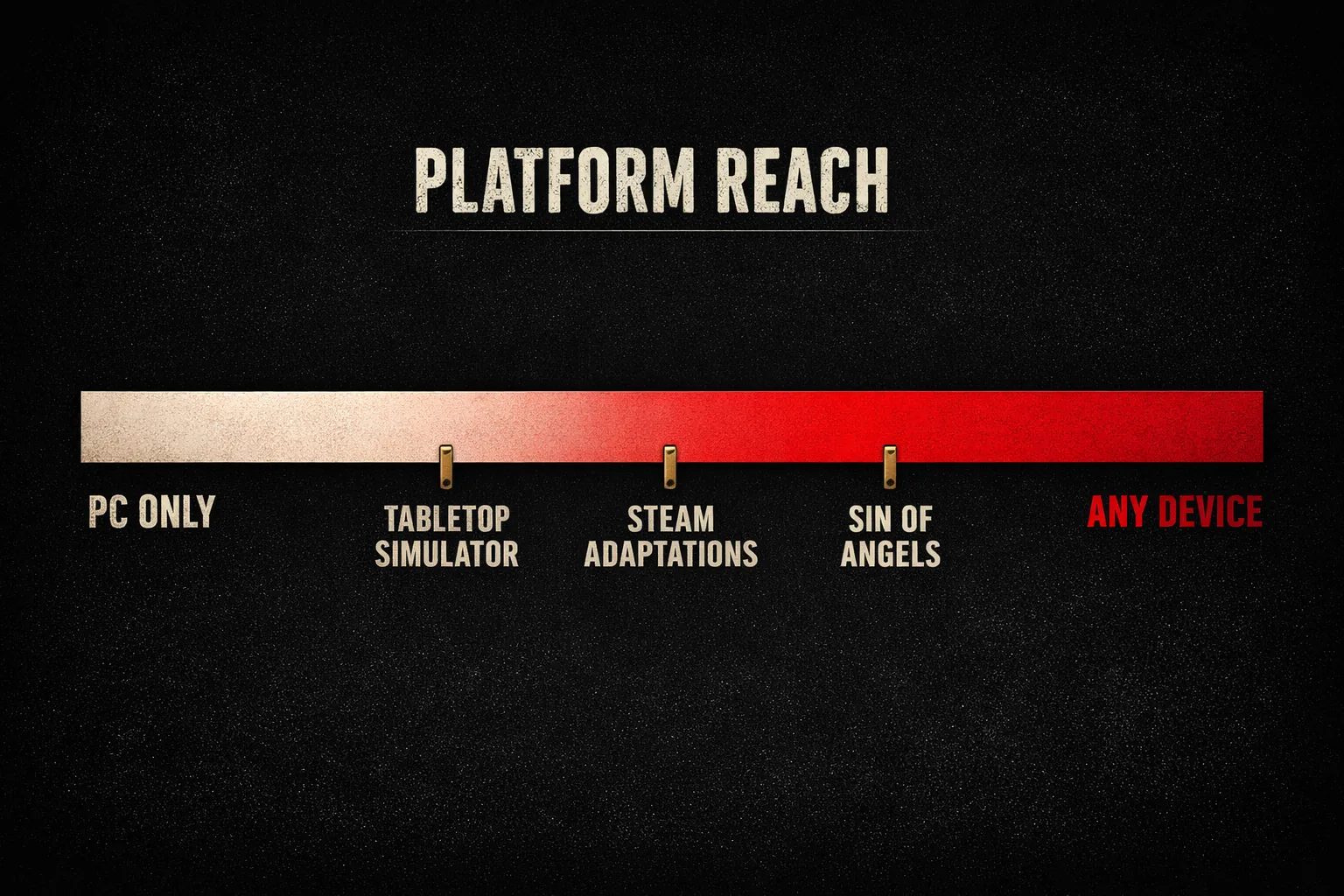
The rise of portable PC gaming has also changed how people play. Finding board games on Steam Deck is incredibly easy now. Games like Slay the Spire and Dorfromantik play perfectly on the handheld, letting you run a solo strategy campaign from the couch.
However, Steam restricts you to PC, Mac, or Linux. If half your crew wants to play from phones or tablets, a Steam-only game leaves them out. That's why many modern digital tabletop experiences are moving toward cross-device support. A player on a PC can cut deals and trade fire with a player on mobile, no extra software needed on either end.
How Sin of Angels Fits
Promotes Sin of Angels, the site's own browser-based biker board game, still in beta.
Run Sin of Angels back through the three-question test from earlier in this guide and it answers all three the same way: the software handles the rules, nobody has to buy a copy, and it reaches every device your crew owns. That's precisely the space between the sandbox and the storefront where we built this game.
We are making an outlaw motorcycle club strategy board game. You run a gritty California underworld. You muscle rival gangs off the streets, run guns, move Narcotics, and settle disputes in the dirt.
This is a turn-based area-control game. It is a digital adaptation of the gang-warfare tabletop format, designed to be played online with friends, solo against a smart AI, or locally in a shared room.
Built for the Browser First
We know the hardest part of game night is getting everyone onto the same software. That's why Sin of Angels leads with the browser. It's a website, no installation required, built so you drop in and play once you're in.
Platform reach is wide. It works on desktop, tablet, and phone. iPhone users play directly in the browser. A native Android app is planned, and it is coming to Steam for PC, no date yet.
Because it runs in the browser, you never have to worry about whether your friends have the right operating system or enough hard drive space. You send them a link, they join the lobby, and the turf war begins.
The Core Loop: Turf, Cash, and Blood
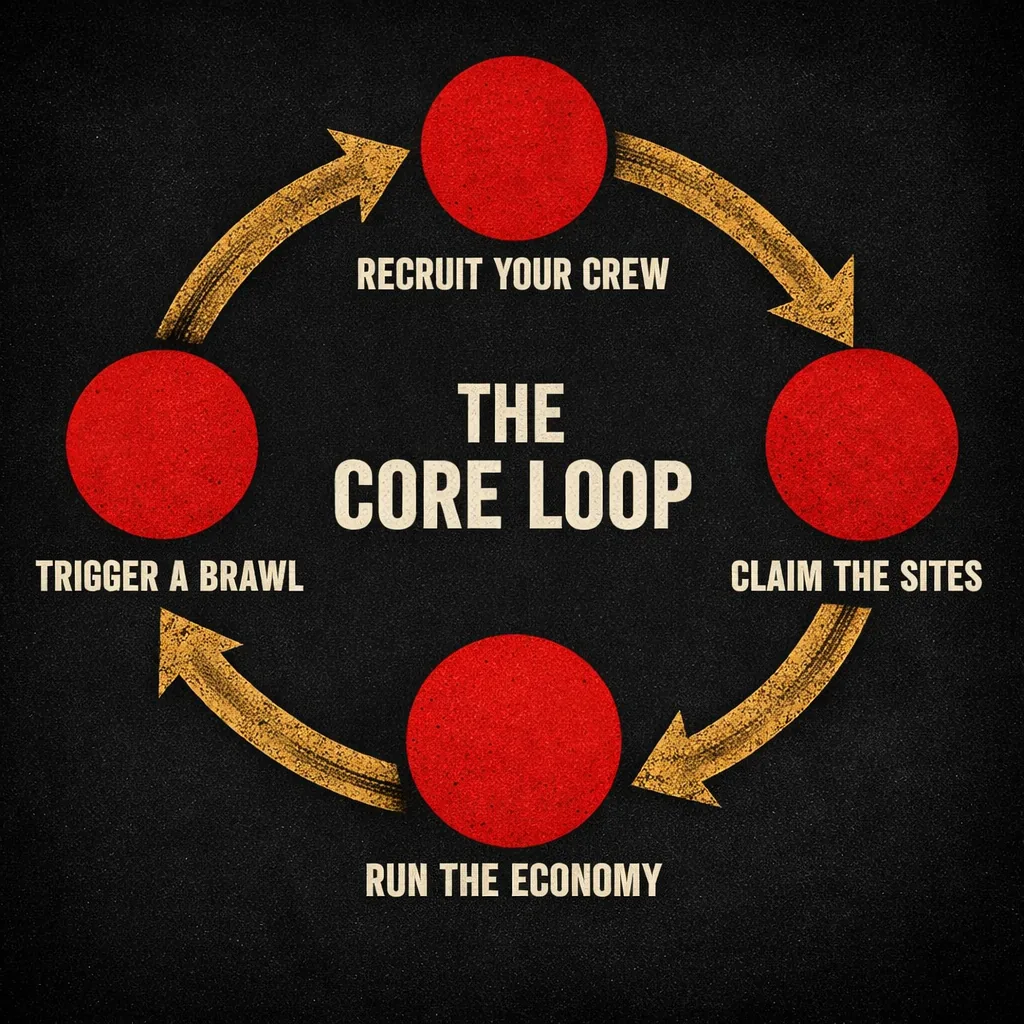
You start by building your crew. You bring in patched Members and raw Recruits. You move your bikers onto the town's Sites to claim territory. The board is a map of L.A. County filled with:
- Dive bars
- A gun shop
- A morgue
- A drug lab
- The docks
- The highway out of town
Every location is a front you can use for Cash, Guns, or Narcotics.
You run the economy by trading on The Silk Road. You manage your Felonies with the law to keep the cops off your back. Every turn, you spend Orders to maneuver your crew into striking distance.
But it's not just economy management. This game is about negotiation and betrayal. You will cut deals with rival clubs. You will forge ceasefires to take down a mutual threat. And when the time is right, you will break those alliances and bleed them dry.
When clubs clash on a Site, it triggers a Brawl. This is not just a dice roll. The game shifts into a cinematic 3D battle where your riders exchange fire. If a rider goes down, the game plays an atmospheric death vignette.
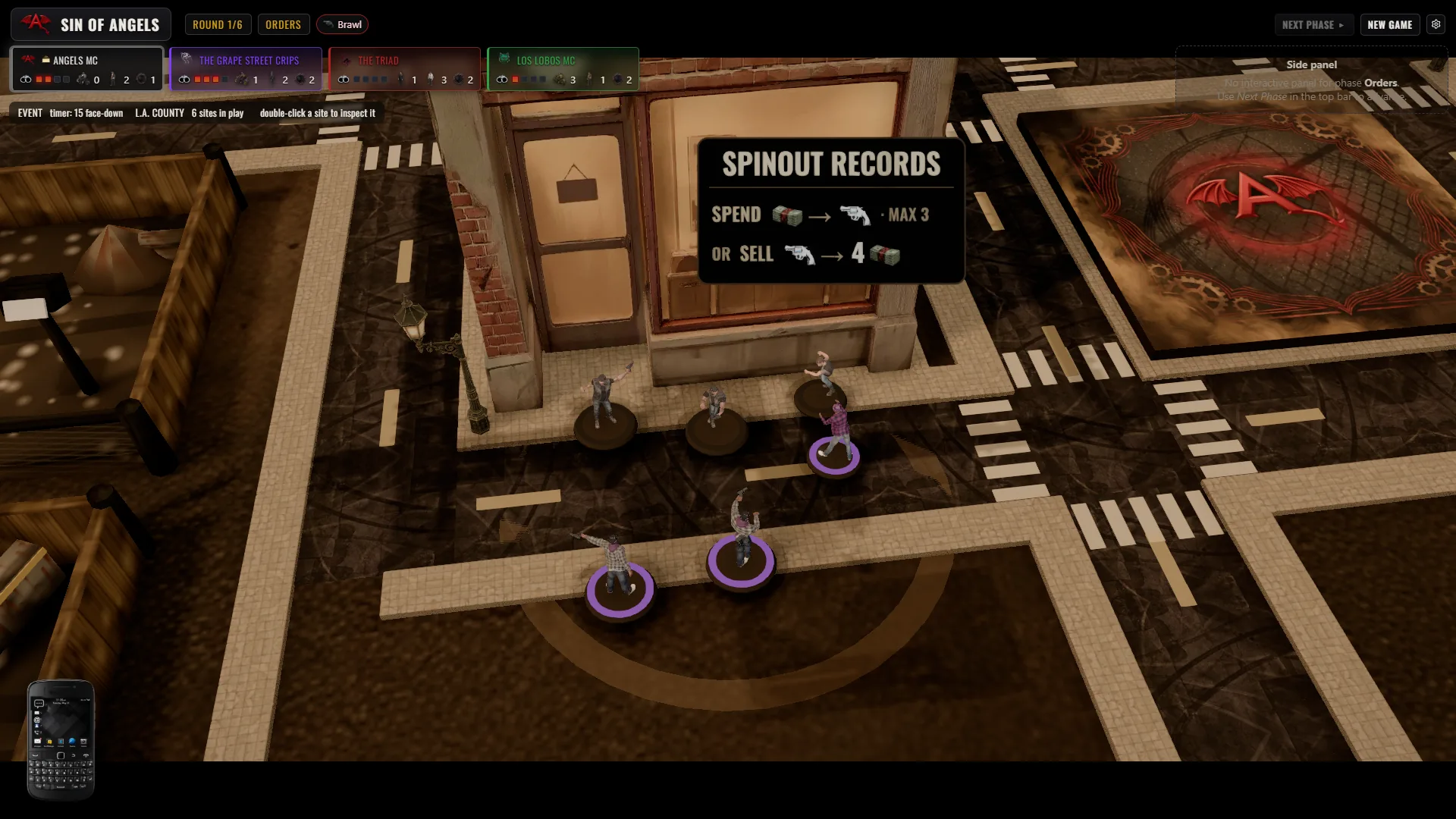
Over roughly six rounds, you fight to control territory, and territory is how you earn Cash. The gang holding the most Cash when round six ends wins the game.
Party Mode on the Big Screen
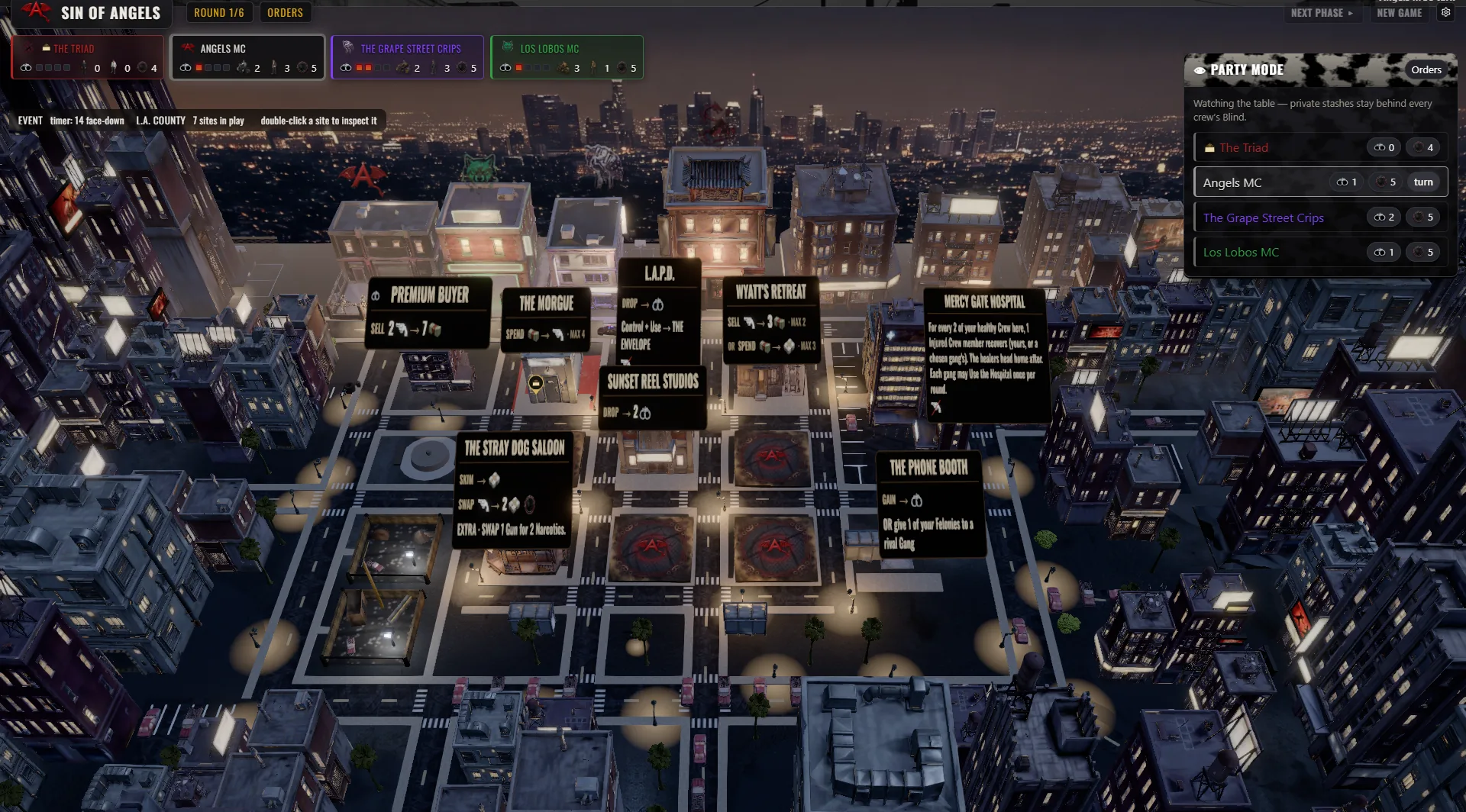
Sin of Angels features a dedicated party mode. Throw the 3D board up on a TV, and everyone in the room connects and plays from their own phone.
Your resources, Orders, and secret alliances stay hidden on your personal screen. The main action plays out on the TV for everyone to see. It turns a heavy strategy game into a loud, aggressive game night in your living room.
Join the Beta
Sin of Angels is in closed beta at soa-game.com. The beta list is open, and early players get in first and help us break it before launch.
Related Guides
- Sin of Angels: The Outlaw Motorcycle Club Strategy Board Game
- Is Board Game Arena Free? What You Get, and the Alternatives
- Board Game Arena Alternatives Worth Trying
- Digital Board Games: The Best Ways to Play Online in 2026
Frequently Asked Questions
What Steam game lets you play board games?
Tabletop Simulator is the most popular physics sandbox on Steam for playing board games. It provides a virtual 3D table where players manually move pieces and draw cards. You can download thousands of community-made mods to play almost any tabletop game in existence.
What are the top 5 popular board games?
On Steam, the most popular digital adaptations include heavy strategy titles like Scythe, Dune: Imperium, Terraforming Mars, Gloomhaven, and Wingspan. These games feature automated rules, AI opponents, and online multiplayer. They are built specifically to replicate the physical board game experience on a screen.
Does Steam sell board games?
Yes, Steam has a massive category dedicated to digital board games. You can buy direct adaptations of popular tabletop games, physics simulators that let you load custom games, and classic family board game bundles. Most require you to purchase the game directly through the Steam storefront.
What is the $5 rule on Steam?
Steam requires users to spend at least five dollars on the platform to unlock all community features. This prevents bot accounts from spamming forums or sending massive amounts of friend requests. Once you buy a game or add five dollars to your wallet, your account is fully unlocked for multiplayer invites and community hubs.
Claim Your Turf
Whether you want a physics sandbox to flip the table or a fully automated rules engine, playing strategy games digitally is the best way to keep your crew together.
Sin of Angels gives you the depth of a heavy area-control game with the ease of a browser-based lobby. You can run guns, cut deals, and muscle your friends out of their territory online, solo against the AI, or in party mode on your TV.
Grab your spot in the crew and prepare to ride. Claim Your Spot in the Beta